
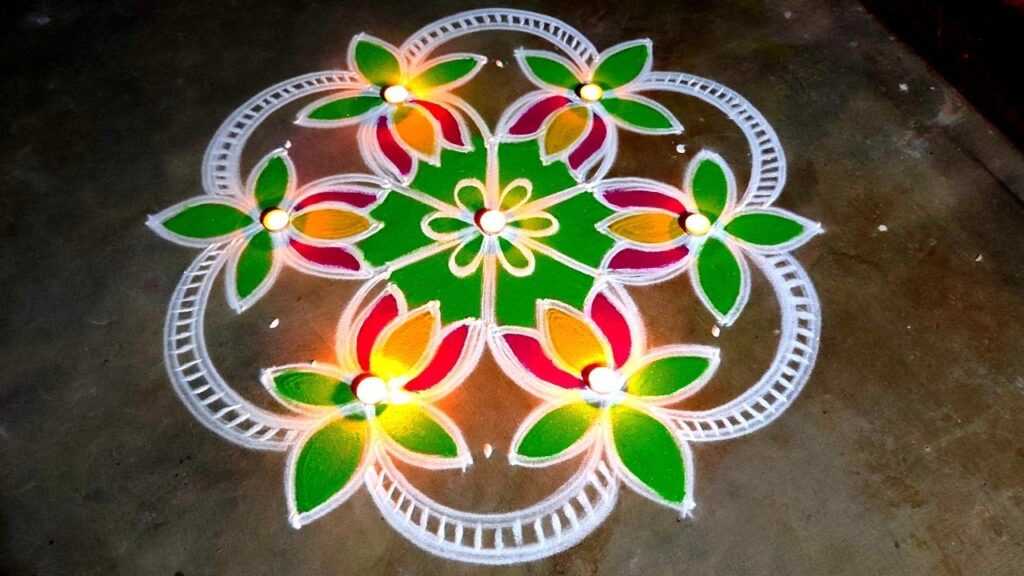
While colourful powders have been the conventional material for Rangoli, there is an increasing number of people who want to celebrate in a more environmentally friendly manner. The flower rangoli design for diwal is a magnificent, aromatic, and earth-friendly method of carrying on with the old tradition this Diwali. It is a perfect harmony of art and nature that provides an eye-catching welcome as well as a delight for the inner self.
Why Choose a Flower Rangoli? The Eco-Friendly Advantage
The origin of the Rangoli is very old, a practice intended to invite positive energies as well as guests. Coloured powders may bring about stunning effects, but usually, they consist of synthetic chemicals that can pollute the environment and even cause skin or respiratory system irritation. A flower rangoli design for diwali is not only a charming alternative but is also derived from the earth and is eco-friendly. The term ‘Pookalam’ is the most common designation for such a work in the South Indian region.
- Sustainability: The discarding of flower petals, leaves, and buds is done through nature as they are totally biodegradable. Once the festival is over, they may be returned to the earth through composting without releasing any harmful residues.
- Natural Beauty: What flowers can offer is a source of strength and liveliness and certain features that artificial powders will never be able to duplicate. The colour gradient in the flower petals is a perfect example of a natural fabric.
- Fragrance: Besides the flower rangoli just looking nice, it also makes the surrounding air filled with light and pure smell which is an added festive atmosphere and also purification of it.
- Connection to Nature: The usage of natural items helps in establishing a strong bond with the environment, causing the celebration to be in line with the principles of nature’s harmony and respect.
- Symbolism: Flowers, to begin with, are the things that carry the deepest meanings in Indian culture – the lotus being the symbol of purity and divinity, marigolds for good luck and wealth, roses for love and beauty. The inclusion of them is the addition of several layers of that.
Thus, selecting a flower rangoli can be considered the“ a1 satta ”-the most excellent option-for an elegant, meaningful, and earth-friendly Diwali celebration in 2025.
Gathering Your Palette: Best Flowers and Materials
The first step of a great flower rangoli is the selection of the right natural raw materials. Pay attention to the aspects of colour, texture, and durability.
- Marigolds (Genda): The most typical flower of Diwali. Bright yellow and vibrant orange petals serve perfectly for covering big areas and making bold outlines. During the season, they are easy to get and quite cheap.
- Roses (Gulab): Four coloured petals of red, pink, white, and yellow, add up to the beauty and soft texture. The red color is very lucky for Laxmi Puja.
- Chrysanthemums (Shevanti): They come in white, yellow, purple, and pink; and their numerous tiny petals can be used to create the finest details, delicate patterns, or even to fill up dense areas with colour.
- Jasmine (Mogra/Chameli): Small white buds which are very popular due to their strong perfume. They are the best choice when used for delicate white lines, for brightening or for making a fragrant base layer.
- Lotus (Kamal): In case of availability, a single lotus in full bloom placed at the center is not only beautiful but also very lucky, as it is the holy seat of Goddess Lakshmi.
- Leaves: The power of green should never be underestimated! Mango leaves (considered very auspicious), Tulsi leaves, Ashoka leaves, or even the simple lawn grass cutting can serve as attractive borders and contrasting materials.
- Other Natural Materials: Besides rice grains, which can be coloured with turmeric for yellow or kumkum for red, there are lots of pulses and lentils (like green moong, yellow moong, red masoor) as well as sawdust that can be utilized creatively for adding texture and for the filling of your designs.
Design Inspirations: From Atomic Minimalism to Elaborate Frescoes
One of the main advantages of a flower rangoli design for diwali is its adaptability. You can either whip up a dazzling piece in no time or dedicate numerous hours to a complex creation.
- The Timeless Concentric Mandala:
- Idea: Working with minimal means, keeping the design clean and neat – such a mandala is a fail-safe option every time. Use chalk to sketch out a few circles nested one inside the other.
- Realization: By turning on a diya or placing a small bowl filled with water and a flower/candle on top in the middle, you decorate each concentric ring with flowers of different colour, going from the center to the outside. The sequence most frequently used is: white jasmine, red rose, yellow marigold, orange marigold, with green mango leaves that frame the last circle.
- Eco-Tip: What is more environmentally friendly than using a metal plate that can be used again or a big banana leaf as a base in lieu of drawing directly on the chemically cleaned floor?
-
Petal-Filled Geometric Shapes
- Idea: Highlight the use of the most auspicious symbols like Om, Swastik, Laxmi footprints (Charan Paduka), or Kalash.
- Realization: At the very center, put the symbol itself that is neat and clear. Using one single saturated hue (for example, red rose petals for footprints or orange. Marigolds for Swastik) fill the symbol to make it prominent. With contrasting white chrysanthemum petals or jasmine buds, create a border for it. Use lighter colors or geometric designs made of different petals to fill the rest of the space.
- Location: The best place for that is the main door or the puja area, which is especially significant at the time of the diwali puja.
3. The Grand Peacock Design
- Concept: Just beauty and grace personified. Probably less controlled, more spontaneous.
- Execution: Draw a peacock figure first. Make the body with darker petals (like if you have purple orchids, asters, or you can use dyed petals – but use natural dyes!) or with tightly packed rose petals. The tail is what is going to bring the most attention – have lines of green leaves radiating out from the centre of the tail and mix in yellow and orange marigold petals between them. For the ‘eyes’ of the feathers use a small round blue (maybe using Aparajita/Butterfly Pea flowers) and outline it with white.
- Impact: A really impressive design for bigger areas.
-
The Geometric Fusion
- Concept: Fuses the regular floral charm with trendy geometric patterns.
- Execution: Make a base pattern of either squares, triangles, or interlocking circles with chalk. Work on these shapes with different coloured petals to fill them up and at the same time keep the lines sharp. You may also have a central floral motif (like a lotus) that is surrounded by the geometric borders made up of petals and leaves.
- Appeal: Gives the festive a modern look but still keeps the vibe festive and traditional.
-
The Minimalist Floating Rangoli
- Concept: Elegant, simple and uses minimum space. Ideal for tabletops or corners.
- Execution: Use a wide but shallow bowl (an urli, which is usually made of brass or clay). Put water in it. Drop petals of different colours (roses, marigolds) in the water one by one. Place a few floating tea-light candles or small diyas.
- Ambiance: Provides a calm, meditative, and fragrant center of attraction, which is especially nice during the evening.
The Modern Context: Tradition in a Changing World
While we do not want to lose the allure of age-old customs such as decorating with flower rangoli for Diwali. The pattern of our daily lives persuades us to partially opt for other forms of participation and amusement. The advent of the internet-based platforms, cricket exchange networks included. That serve as portals of interaction and engagement during the festive season is one such example. Usually, these platforms that can be reached through an online cricket id. Are for those who desire another kind of festive excitement. That is heavily based on analysis and prediction of the game.